
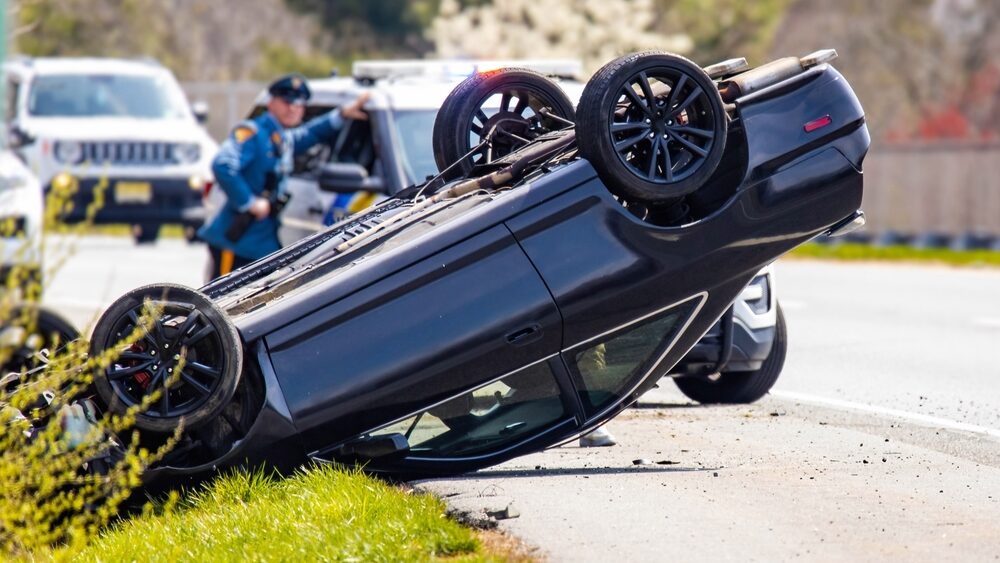
If you were just in a car accident in Jersey City, the next 72 hours matter more than most people realize. Not because of any arbitrary deadline, but because the evidence that determines whether your claim succeeds starts changing immediately. Witnesses leave. Surveillance footage gets overwritten. Injuries that feel minor at the scene become serious two days later. The other driver’s insurance company begins building its case before you have even decided whether to make one. At The Law Offices of Anthony Carbone, the calls that come in the day after an accident almost always start with the same sentence: “I wasn’t sure what to do.” This post answers that question directly.
At the Scene: What to Do Before You Leave
Call 911. Even if the collision seems minor, a police report creates an official, contemporaneous record of the accident that is far more credible than anyone’s memory later. In Jersey City, the responding officer will generate a report that includes the parties’ information, a diagram of the scene, and the officer’s preliminary assessment of what happened. That report is often the first document an insurance company reviews.
While you are waiting for police, use your phone. Photograph the damage to both vehicles from multiple angles. Photograph the intersection or road conditions, the position of the vehicles before they are moved, any skid marks, traffic signals, and the license plates of all vehicles involved. If there are witnesses who stopped, get their names and phone numbers before they leave. Bystanders on busy corridors like Routes 1 and 9 or the area around the Holland Tunnel typically do not wait around, and their observations about who had the green light can be decisive.
Exchange insurance information and your driver’s license number with the other driver. Do not discuss who was at fault, and do not apologize. An apology at the scene has been used as an admission against an injured person in New Jersey civil litigation. Keep your exchanges factual: name, insurance carrier, policy number.
Getting Medical Attention: Why This Cannot Wait, Even if You Feel Fine
Adrenaline masks pain. This is not a figure of speech. Neck and back injuries from rear-end collisions, traumatic brain injuries from head impacts, and internal injuries from seatbelt forces commonly present without significant pain in the first hours after an accident. By the next morning or two days later, the symptoms emerge. By that point, the delay in seeking treatment has created a gap in your medical record that the other driver’s insurance company will use to argue your injuries were not caused by the accident.
If you were transported from the scene, follow through on every recommended test and referral. If you refused transport or went home, see a doctor that same day or the next morning. An urgent care visit or an emergency room visit that documents your symptoms creates the contemporaneous medical record that connects the accident to your injuries. Waiting a week because you wanted to see if it got better is one of the most effective arguments insurers use to devalue soft tissue and whiplash claims in Hudson County.
New Jersey’s no-fault Personal Injury Protection benefits are available through your own auto insurance policy regardless of who caused the accident. PIP covers medical expenses, a percentage of lost wages, and essential service expenses up to your policy limits. Notifying your own insurer of the accident and activating PIP coverage is a separate step from pursuing a liability claim against the other driver. You are entitled to both.
The Other Driver’s Insurance Company Will Call You. Here’s What to Do.
Within 24 to 48 hours of a significant accident, an adjuster from the other driver’s insurance company is likely to contact you. The call will sound friendly and routine. They will tell you they are just gathering information about what happened. They may ask for a recorded statement.
Do not give a recorded statement to the other driver’s insurer. You are not required to. The adjuster represents the insurer’s financial interest, not yours. A recorded statement taken at this stage, when you do not yet know the full extent of your injuries, when you may still be in pain or distress, and when the fault picture has not been fully investigated, is almost always used to lock you into a version of events that can be compared unfavorably against later medical or physical evidence. Any inconsistency between your early statement and your later account of the accident or your symptoms will be used to challenge your credibility.
You are obligated to cooperate with your own insurance company’s investigation. You are not obligated to cooperate with the at-fault driver’s carrier before you have spoken with an attorney. A brief, polite response that you are represented by counsel and they should direct further communications there ends the conversation appropriately.
What to Document in the First 72 Hours Beyond the Scene
Start a written or notes-app record of your symptoms. What hurts, where, and how much. What activities you cannot do that you normally could. Whether you slept, whether the pain woke you up. This symptom journal does not need to be elaborate. A daily entry of a few sentences creates a contemporaneous record that is far more persuasive at mediation or trial than memory reconstructed months later.
If you missed work, document it. Keep records of every medical appointment, every prescription, every over-the-counter purchase for the injury. Save your damaged vehicle photos. If there is a business on the corner of the intersection or a gas station near the collision site with exterior cameras, note it. That footage typically overwrites on a 24 to 72-hour cycle, and an attorney can send a preservation letter requesting it be retained.
If you were injured on a road with known hazard conditions, such as a poorly marked construction zone along the Turnpike extension or deteriorated pavement near Journal Square, note those conditions specifically. In some cases the municipality or contractor responsible for road conditions shares liability, and identifying that early can be important.
When to Contact a Car Accident Lawyer in Jersey City
The answer is sooner than most people think. Consulting an attorney does not mean filing a lawsuit. It means having someone evaluate whether your claim has merit, what its realistic value is, and what steps need to happen before anything is settled or waived. An attorney can also send preservation letters for surveillance footage, request the police report, obtain the other driver’s insurance policy information, and handle the communication with insurers so you do not inadvertently harm your claim.
The consultation is free at the Law Offices of Anthony Carbone, and it is available in the evenings and on weekends. Most personal injury attorneys in New Jersey work on a contingency fee basis, meaning you pay nothing unless the case resolves in your favor. There is no financial reason to wait, and there are real evidentiary reasons not to.
Contact The Law Offices of Anthony Carbone After Your Jersey City Car Accident
The steps you take in the 72 hours following a car accident in Jersey City shape the foundation of any personal injury claim you may pursue. Evidence is preserved or lost. Medical records are created or left incomplete. Statements are given or declined. Every one of those decisions has consequences.
The Law Offices of Anthony Carbone has represented car accident victims throughout Jersey City, Hudson County, Union City, Newark, and New Jersey for over 35 years. Attorney Carbone offers free consultations that include early morning, evening, and weekend availability, and Spanish-speaking staff are on hand for clients who prefer to communicate in Spanish. If you were injured in a car accident and are not sure what your next step should be, call 201-685-3442 today.