
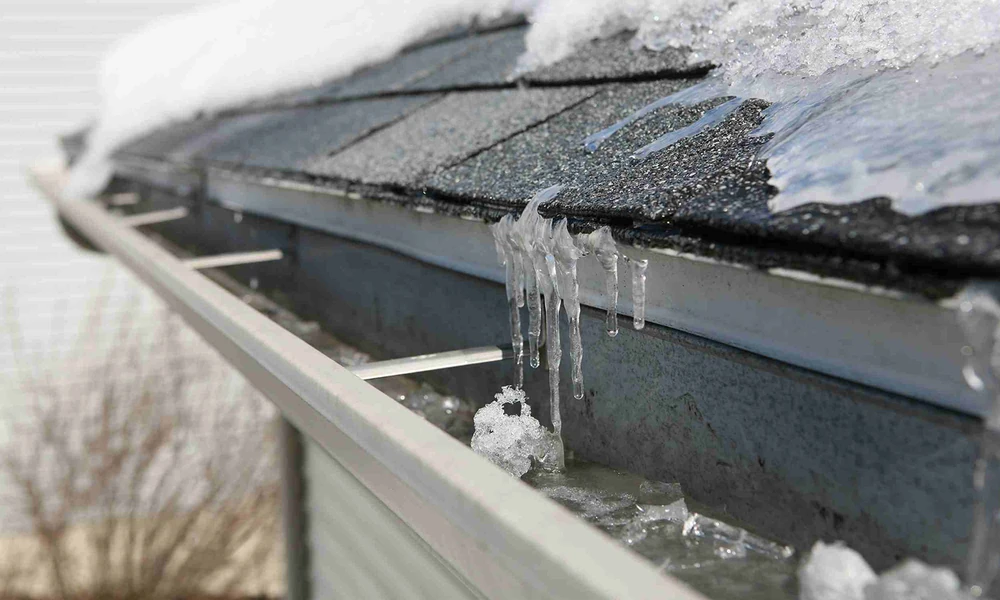
When a ridge of ice builds along the edge of a roof, most people see a roofing problem. Water is coming in, so the roof must be failing. In reality, ice dams are usually a message from somewhere else: the attic, the ceiling, the way heat moves through the house. The roof just happens to be where the damage shows up. Understanding the chain of events behind an ice dam is the fastest way to stop it from coming back.
A problem with a chain of causes
Ice dams form when snow on the roof melts, runs down toward the eaves, and refreezes at the edge. The ridge of ice then traps more meltwater behind it, and that water can work its way under the shingles and into the house. The University of Minnesota Extension explains in its guide to dealing with and preventing ice dams that nonuniform roof surface temperatures lead to ice dams. In plain terms, one part of the roof is warm enough to melt snow while another part, usually the edge, stays cold enough to freeze it again.
So the question isn’t why the edge freezes. It’s why the upper roof is warm.
Start with someone who looks at the whole picture
Because the cause usually lies in the attic and ceiling, the best first step is an inspection that covers both the roof and the space under it. A roofing company in Johnson County can check the roof edges, flashing, and shingles for water damage and explain what they see, then point out signs in the attic that heat is escaping, such as frost on the underside of the deck, compressed insulation, or stained wood.
For a long term fix, you may need more than a roofer. Air sealing and insulation work often belong to an insulation contractor or a home energy professional, and a good roofer will tell you when that’s the case. Ask for photos and a written summary of what’s contributing to the problem, and ask who is best placed to correct each part.
Where the heat comes from
Heat reaches the roof deck in two main ways. One is air leakage: warm indoor air slipping through gaps around recessed lights, attic hatches, plumbing and wiring penetrations, chimney chases, and the tops of walls. The other is conduction through a ceiling that doesn’t have enough insulation.
The Minnesota guide gives the order of operations. First, make the ceiling airtight so no warm, moist air flows from the house into the attic. After sealing the air leakage paths, consider increasing the ceiling or roof insulation to cut down on heat loss by conduction. The order matters. Adding insulation on top of leaks can hide a problem without solving it.
What the roof and gutters add
Heat is the main cause, but roof details can make an ice dam worse. Clogged gutters hold water that freezes into a solid mass. Poor ventilation lets heat build in the attic. Low slope sections, valleys, and areas where one roof meets another tend to collect snow and melt unevenly. Missing or poorly installed underlayment at the eaves gives water an easy path inside.
The same Extension guide describes natural attic ventilation as needed to dry the attic and remove heat buildup in summer, and it notes that mechanical attic ventilation is not recommended there, since it can create other moisture problems and negative pressure in the home. Local conditions vary, so ask your contractor which ventilation approach suits your house instead of assuming that more fans means better protection.
Breaking the chain
Putting it together, prevention follows the same sequence as the cause. Seal air leaks between the living space and attic. Add insulation where it’s thin. Make sure the vents at the eaves aren’t blocked by insulation, and use baffles to keep a channel open. Keep gutters and downspouts clear before winter. Ask your roofer whether an ice and water barrier along the eaves is appropriate when your roof is replaced, since it adds a layer of protection against water backing up under the shingles.
Heat cables along the roof edge can help in problem spots, but treat them as a patch, not a cure, because they leave the source of heat untouched.
What not to do
When an ice dam is already there and water is dripping inside, it’s tempting to attack it. Don’t. Chipping at ice with a hammer, an ax, or a shovel can damage shingles and gutters, and climbing onto an icy roof is dangerous. Falling ice is a hazard too. If you need snow removed from the lower roof, use a roof rake from the ground, and stay clear of power lines and anything overhead. If water is entering the home, move belongings out of the way, place containers under drips, and call a professional.
Be careful about anyone who offers a quick fix without looking in the attic. A cosmetic repair that ignores the heat source will usually be back next winter.
Reading the message
An ice dam is a symptom with a story attached: warm air escaping, a cold edge, and a roof caught in the middle. The cure is rarely about the roof alone. Look for where the heat is coming from, fix that first, and keep the roof edge and gutters in good shape so water has somewhere to go.
Do that, and the dam stops being a yearly argument with the weather. It becomes a problem solved once, and a winter spent indoors without wondering what’s happening above the ceiling.